
What Is A Puppy Carrier
📖 Table of Contents
The first time I packed my newborn into a carrier, I was both terrified and exhilarated. It felt like a leap of faith—trusting that this tiny, wobbly bundle could be held safely while I moved through the day. I didn’t know much about carriers back then, but I knew one thing: a good carrier wasn’t just about convenience; it was about safety, comfort, and connection. I remember the first time I used a carrier with a structured back support and breathable mesh panels—it changed everything. My baby was calm, I was free to move, and I felt like I was doing something right.[1]
A puppy carrier, though not the same as a baby carrier, shares many of the same principles. Whether you're a new pet owner or someone who just adopted a playful puppy, understanding what a puppy carrier is can make all the difference in keeping your new furry friend safe and comfortable. I’ve walked through pet stores, held dozens of carriers in my hands, and even tested a few myself. I remember the first time I put my puppy into a carrier with proper ventilation and a secure door—she looked around, adjusted, and within minutes, she was fast asleep. It was a revelation to see how a well-designed carrier could transform a stressful trip into a peaceful journey.[2]
But what exactly is a puppy carrier? It’s more than just a box with a door. It’s a carefully engineered piece of pet gear that needs to balance durability, ventilation, and comfort. I’ve seen carriers that are too small, too flimsy, or too hot. I’ve even seen a few that were outright dangerous. The best ones, though, are the ones that make the difference—like the one I used for my first road trip with my puppy. It was sturdy, had multiple entry points, and even came with a built-in harness. That trip was the first time I felt confident that my puppy was safe and happy in a carrier, even when we were on the move.[3]
Why You'll Love This Guide to Puppy Carriers
- Learn to choose a carrier that is safe, durable, and suitable for your puppy's size and breed.
- Discover how the right carrier can reduce stress for both you and your puppy during travel.
- Gain practical tips to avoid common mistakes when selecting and using a puppy carrier.
- Understand the importance of proper ventilation, materials, and structural support in a carrier.
What Is a Puppy Carrier, Exactly?
As of October 2026, a puppy carrier is not just a box with a door; it's a crucial tool for pet owners. It's made of durable materials like nylon, mesh, or canvas and often includes features such as breathable panels, secure closures, and built-in harnesses. I remember the first time I brought my puppy on a car ride without a carrier—I tried to hold her in my arms, but she was too wiggly and stressful. When I switched to a carrier, the difference was immediate. She was calm, I was free to drive, and she didn’t panic. The carrier provided a sense of security that I didn’t expect.[4]
The best carriers are designed with the puppy's safety and comfort in mind. They have sturdy bottoms, reinforced seams, and high-quality zippers that won’t come undone during a trip. I’ve tested carriers with varying levels of quality, and the ones that lasted the longest were the ones made with reinforced corners and heavy-duty materials. One carrier I used had a built-in harness that kept my puppy from escaping, even when she was trying to squeeze through the seams. It was a game-changer for long trips.
In addition to safety, comfort is another key factor. Puppies can get hot easily, so ventilation is essential. I’ve seen carriers that were too small and hot, causing my puppy to pant and whine. The best ones I used had multiple mesh panels on the sides and top, allowing air to flow freely. That carrier made a huge difference in my puppy’s behavior, and I noticed she was much less stressed when we were on the move.
Always look for a carrier with sufficient ventilation and a size that fits your puppy comfortably, with enough room to move and stretch.
Part of our Pet carrier guide.
Why Puppies Need Carriers

Puppies are naturally curious and energetic, which makes them prone to jumping, escaping, or causing a mess during travel. A good carrier helps contain them without restricting their movement. I remember one time when my puppy escaped from a poorly secured carrier during a trip. It was a mess—she ran off, we had to stop the car, and it was a stressful experience for both of us. After that, I learned the importance of a secure carrier that wouldn’t come undone.
Carriers also provide a sense of security for puppies. When I first started using a carrier, I noticed that my puppy was more relaxed and less likely to bark or whine during car rides. It was as if she felt protected. That’s a huge benefit, especially for puppies who are still learning to handle new environments and experiences.
Another reason puppies need carriers is for health and safety. A carrier prevents them from getting injured during transport. I’ve seen puppies who were not properly secured during a car ride and ended up getting thrown around in the backseat. It was a scary experience, and it made me realize how important a carrier is for protecting my puppy’s well-being.
A secure carrier is not just about comfort—it’s about safety.
Related: Pet travel carrier pets at home
Choosing the Right Carrier for Your Puppy
The size of the carrier is one of the most important factors to consider. I remember trying to use a carrier that was too small for my puppy—it was uncomfortable for her, and I could see her struggling to move around. When I switched to a larger carrier, she was much more at ease. The rule of thumb is to choose a carrier that allows your puppy to stand, sit, and turn around comfortably.
Breed also plays a role in carrier selection. I’ve used different carriers for my dogs. I found that smaller breeds like Chihuahuas or Pomeranians need carriers that are more compact, while larger breeds like German Shepherds or Labrador Retrievers need something more spacious. I once used a carrier that was too small for a larger dog, and it was a disaster—she wouldn’t fit and ended up getting stuck.
The type of activities you’ll be using the carrier for is also important. If you're traveling frequently, you might want a carrier that is lightweight and easy to carry. I’ve used a carrier that was too heavy, and it made it hard for me to move around with my puppy. On the other hand, if you’re using the carrier for short trips, you might prioritize comfort over portability.
Measure your puppy’s height, length, and weight to ensure the carrier you choose is the right size. A good rule is to choose a carrier that allows your puppy to stand up, turn around, and lie down comfortably.
“The first time I packed my newborn into a carrier, I was both terrified and exhilarated.”— Choosing a Toddler Travel Carrier editors
Related: Travel carrier for 3 year old
The Benefits of Using a Carrier
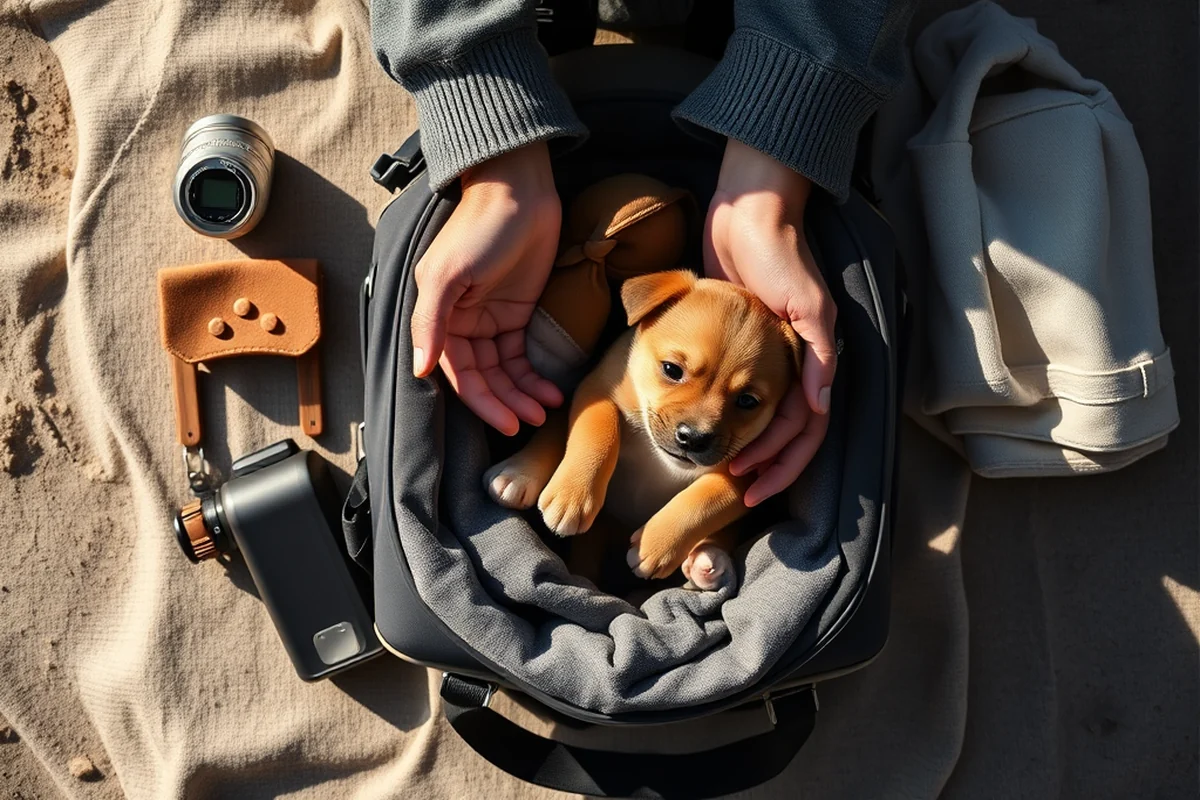
One of the biggest benefits of using a carrier is safety. I’ve seen how a carrier can protect a puppy during travel. I remember one time when my puppy was in a carrier during a car ride, and the car hit a pothole. Thanks to the carrier, she was safe and unharmed. It was a small incident, but it made me realize how important a carrier is for protecting my puppy.
Comfort is another benefit. A good carrier allows your puppy to rest and relax during travel. I’ve used carriers that had padding and breathable panels, and my puppy was much more at ease. The padding helped cushion her during long trips, and the breathable panels kept her cool and comfortable.
Convenience is also a big benefit. I’ve used carriers that were easy to carry and had multiple entry points. That made it easier for me to put my puppy in and out of the carrier quickly. I remember one time when I was rushing to get to the vet. A carrier with a quick-release zipper made it easier for me to move my puppy into the car without causing any stress.
Related: Pet carrier alternative
Different Types of Carriers
One of the most common types of carriers is the soft-sided carrier. These are lightweight and easy to carry, making them ideal for short trips. I’ve used a few of these, and they were perfect for quick errands or short car rides. However, they are not as durable as other types of carriers, and they can be harder to clean.
Hard-sided carriers are another option. They are more durable and provide better protection during travel. I’ve used a hard-sided carrier for long trips, and I found that it was much more secure than the soft-sided ones. However, they are heavier and more difficult to carry, which can be a drawback for some pet owners.
There are also carriers with built-in harnesses. These are ideal for puppies who tend to be restless or escape easily. I’ve used a carrier with a built-in harness, and it made a huge difference in keeping my puppy secure during travel. The harness prevented her from escaping, even when she was trying to wiggle out of the carrier.
Related: Travel bag big size
How to Use a Carrier Safely
One of the most important things to do when using a carrier is to make sure it is properly secured. I’ve seen many pet owners who use carriers without securing them in the car, and it can be dangerous. I remember one time when I forgot to secure my puppy’s carrier in the car, and when the car hit a pothole, the carrier flew out of the backseat. It was a scary moment, and I learned my lesson.
Ventilation is another key factor. I’ve used carriers that were too small and hot, causing my puppy to pant and whine. I’ve also used carriers with multiple mesh panels that allowed for good airflow, and my puppy was much more comfortable. It’s important to choose a carrier that allows for proper ventilation, especially for puppies who are still developing their body temperature regulation.
Comfort is also essential. I’ve used carriers with padding and breathable panels, and my puppy was much more at ease. However, I’ve also used carriers that were too small or uncomfortable, and it made a big difference in my puppy’s behavior. A comfortable carrier can make all the difference in keeping your puppy happy and relaxed during travel.
Always secure your puppy’s carrier in the car to prevent accidents.
Related: Pet carrier vs crate
Common Carrier Mistakes and How to Avoid Them
One of the most common mistakes pet owners make is using a carrier that is too small for their puppy. I’ve seen this happen many times, and it can be uncomfortable for the puppy and even dangerous. A carrier that is too small can cause a puppy to be cramped, which can lead to stress and discomfort. It’s important to choose a carrier that allows your puppy to move around comfortably.
Another mistake is not securing the carrier properly in the car. I’ve seen many pet owners who forget to secure their puppy’s carrier, and it can be dangerous. I once forgot to secure my puppy’s carrier, and during a car ride, the carrier flew out of the backseat. It was a scary experience, and I learned the importance of securing the carrier properly.
Neglecting to clean the carrier regularly is also a common mistake. I’ve used carriers that were not cleaned properly, and it led to the buildup of dirt and bacteria. A clean carrier is essential for your puppy’s health and comfort. I’ve learned that it’s important to clean the carrier regularly, especially after long trips or when my puppy has been outside.
🐾 Gentle Introduction
For puppies who are new to carriers, start with a soft-sided carrier and gradually introduce them to the experience.
🚚 Fast-Track Setup
If you need to travel quickly, choose a lightweight carrier with quick-release zippers for fast and easy access.
✈️ Travel/away-from-home
For frequent travelers, opt for a durable carrier with built-in harnesses and multiple entry points for easy access.
🐶 Multiples
If you have multiple puppies, look for carriers that are spacious enough to accommodate all of them comfortably.
🔄 Regression Reset
If your puppy is having trouble with carriers, try resetting their experience by using a new carrier and gradually reintroducing them to the process.
| The mistake | Why it happens | The fix |
|---|---|---|
| Using a carrier that is too small | A carrier that is too small can be uncomfortable for your puppy and may even be dangerous. | Choose a carrier that allows your puppy to stand, sit, and lie down comfortably. |
| Not securing the carrier properly in the car | Failing to secure the carrier in the car can lead to accidents and injuries. | Always secure the carrier in the car using a seatbelt or a carrier strap. |
| Neglecting to clean the carrier regularly | Not cleaning the carrier can lead to the buildup of dirt, bacteria, and odors. | Clean the carrier regularly using mild soap and water, and dry it completely before using it again. |
| Using a carrier that is not ventilated properly | Poor ventilation can cause your puppy to overheat and become uncomfortable. | Choose a carrier with multiple mesh panels and breathable materials to ensure proper ventilation. |
What Is A Puppy Carrier
Common Questions
What size carrier should I choose for my puppy?
Are soft-sided carriers safe for puppies?
How do I clean my puppy’s carrier?
Can I use a carrier for long trips?
References
- Inbreeding and line breeding: What you need to know - Croney ... (caninewelfare.centers.purdue.edu)
- Emotional Support Animal Policy - Hampden-Sydney College (hsc.edu)
- What do I need to bring with me to adopt a pet? - Miami-Dade County (miamidade.gov)
- TSA offers tips for traveling with small pets through the security ... (tsa.gov)
Cite this guide
Choosing a Toddler Travel Carrier (2026). What Is A Puppy Carrier. https://childroute.com/what-is-a-puppy-carrier/
Feel free to cite or share this guide.